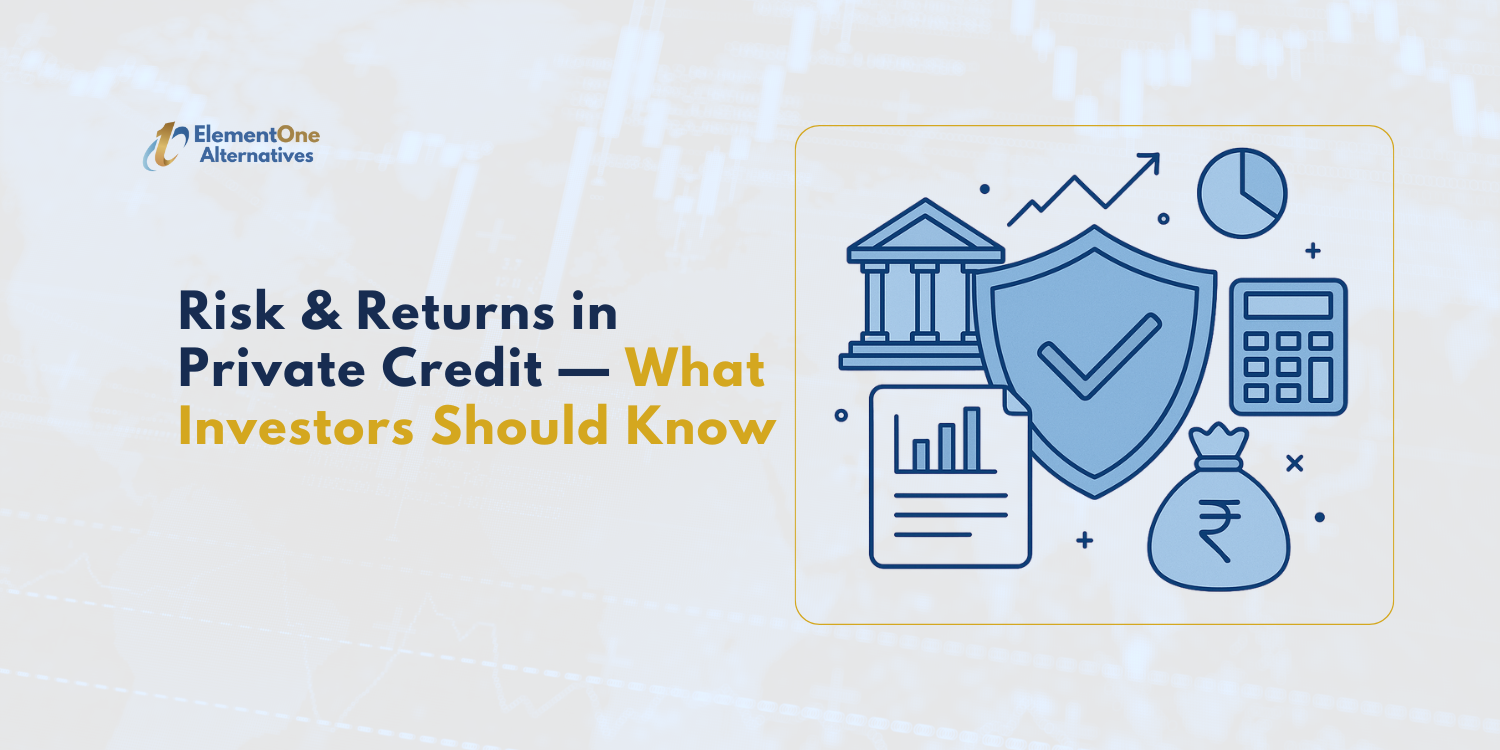
Private Credit has emerged as one of the fastest-growing fixed-income strategies for HNIs and Family Offices. Offering 11–16% annual yields, monthly or quarterly payouts, and collateral-backed security, it is increasingly viewed as a modern replacement for FDs and unsecured bonds. However, before allocating capital, investors want a clear understanding of the Risk & Returns in Private Credit to ensure the strategy aligns with their goals and risk appetite.
✅ What are the risks?
✅ How are returns generated and protected?
This article breaks down the Risk & Returns in Private Credit in a clear, practical, no-jargon way.
In our previous blog, we explained how Family Offices & AIFs use Private Credit and Real Estate AIFs to build stable, high-yield portfolios.
👉 Read Blog : How Family Offices & AIFs Are Building Stable, High-Yield Portfolios
Now, let’s go deeper into understanding Private Credit specifically.
What Is Private Credit?
Private Credit refers to lending capital to private companies (not through banks or public debt markets) in a structured, legally protected format.
Investors participate through AIFs (Alternative Investment Funds) or curated direct deals.
Returns come from contractual interest, and security comes from collateral + legal rights.
Private Credit is popular because it delivers:
✔ Higher yield
✔ Security
✔ Predictable payouts
✔ Shorter investment tenure
✔ Not market-linked
But like every investment, it carries risk. The good news?
The risks are structured, known, and mitigated with strong protections.
How Returns Are Generated in Private Credit
1. Contractual Interest
A company agrees to pay a fixed interest rate (e.g., 12% per year) as per a signed legal contract.
Unlike equity, returns do not depend on stock price or market volatility.
2. Collateral-Backed Lending
Returns are protected with security such as:
✅ Real estate mortgage
✅ Land / building
✅ Machinery
✅ Inventory
✅ Cashflows
✅ Receivables
✅ Promoter guarantee
✅ Pledge of shares
If the borrower defaults, the lender has the legal right to sell or recover value from the asset.
3. Monthly or Quarterly Payouts
Private Credit AIFs usually pay interest regularly:
-
Monthly
-
Quarterly
-
Semi-annual
This makes Private Credit ideal for investors needing steady cashflow.
4. Shorter Tenure
Private Credit deals usually have a 1–4 year maturity, not 7–10 years like Private Equity.
This protects investors from long-term uncertainty.
5. Senior-Secured Position
Private Credit lenders often have first charge on the borrower’s assets.
This means they get paid before equity holders or unsecured creditors.
What Are the Risks in Private Credit?
Let’s be transparent.
There are risks — but each one has well-defined defenses.
1. Borrower May Delay or Default
Risk: Company delays repayment due to cashflow challenges.
Mitigation:
✅ Collateral seizure rights
✅ Escrow on cashflows
✅ Promoter guarantees
✅ Covenants (financial rules borrower must maintain)
✅ Step-in rights (lender can take control of revenue)
Unlike equity or unsecured bonds, Private Credit has legal enforcement power.
2. Collateral Value Fluctuation
If the underlying collateral loses value, recovery becomes harder.
Mitigation:
✅ Lower loan-to-value (LTV) ratios
✅ Third-party valuation
✅ Periodic asset monitoring
✅ Conservative lending
Most private credit deals lend only 60–75% of asset value, keeping a safety buffer.
3. Business or Industry Slowdown
Companies may struggle if their sector faces a slowdown.
Mitigation:
✅ Diversification across industries
✅ Cashflow filtering
✅ Portfolio spread across multiple borrowers
✅ Strict due diligence
4. Liquidity Risk
Private Credit investments cannot be exited instantly.
Mitigation:
✅ Short tenure
✅ Regular interest payouts
✅ Defined exit structure
✅ Collateral takeover if needed
This is not a daily-liquidity product, but repayment visibility is far better than equity.
Why Risk in Private Credit Is Lower Than It Sounds
Private Credit sounds risky only if someone imagines “unsecured loans”.
But reality is completely different.
Private Credit is secured, monitored, legally enforceable lending, with protections that investors do NOT get in:
❌ Equity
❌ Unsecured NCDs
❌ Corporate bonds
❌ Startups
This is why sophisticated investors consider it a “risk-controlled fixed-income product.”
Safety Mechanisms That Protect Investors
1. Collateral (Hard Security)
If borrower doesn’t pay, lender can legally seize and sell the collateral.
2. Escrow Controls
Borrower’s revenue flows into an escrow account.
The lender automatically receives interest before the borrower touches the money.
3. Personal & Corporate Guarantees
Promoters are personally liable — huge skin in the game.
4. Legal Charge & Enforcement
Debt is registered legally.
In case of default, the lender can enforce recovery through courts, tribunals, or asset liquidation.
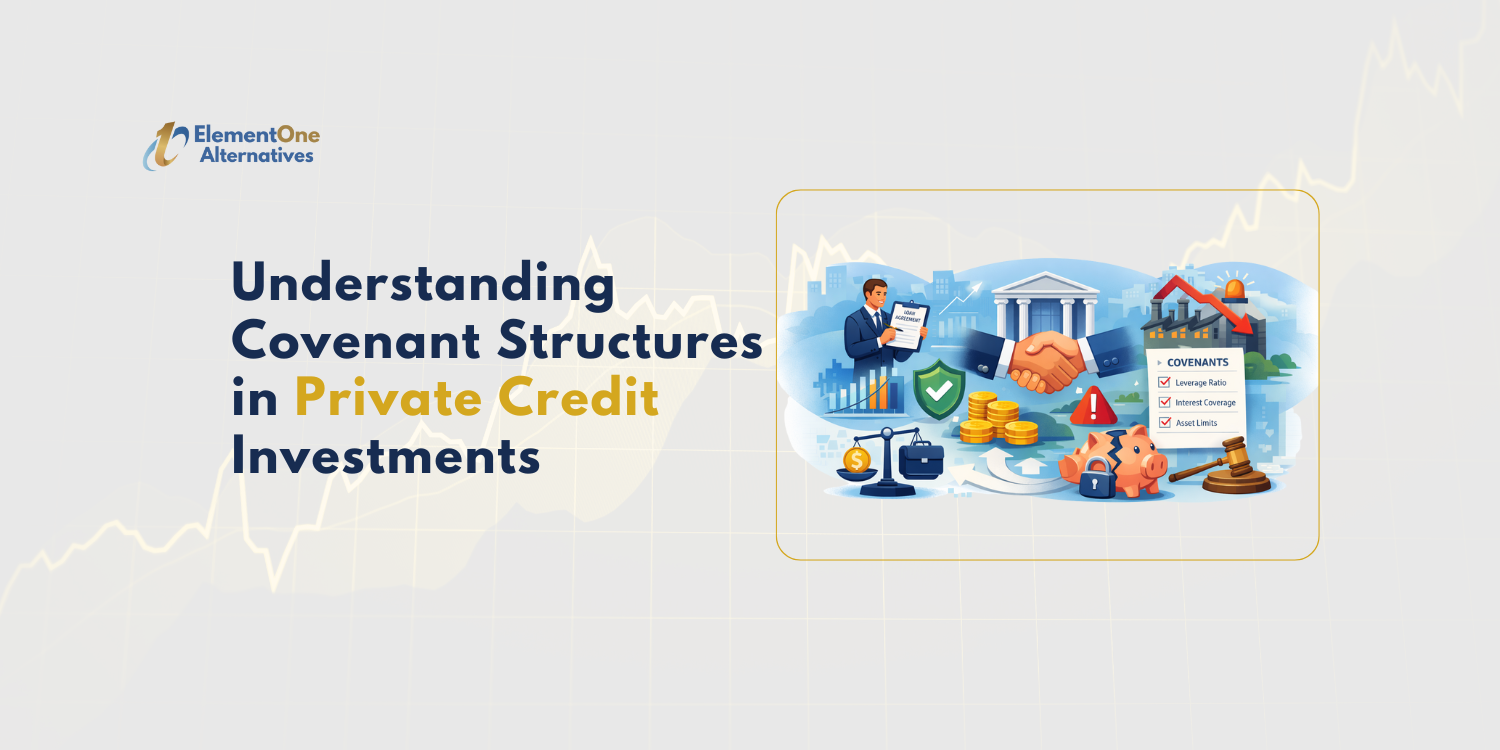
5. Covenants
Borrower must meet financial conditions — if they break terms, lender can take action immediately.
Example covenants:
-
Minimum cash in bank
-
Maximum debt levels
-
No new borrowing
-
Mandatory reporting
6. Continuous Monitoring
Funds track borrower:
✔ Bank statements
✔ Cashflows
✔ Sales
✔ Inventory
✔ Revenue collections
Investors do nothing — the fund manager handles it.
How Private Credit Compares to Other Investments
| Feature | FDs | Bonds | Private Credit |
|---|---|---|---|
| Return | 5–7% | 7–9% | 11–16% |
| Collateral | ❌ No | ❌ Mostly No | ✅ Yes |
| Payout | Annual | Annual | Monthly/Quarterly |
| Market Linked | No | Yes | No |
| Tenure | 1–5 yrs | 3–10 yrs | 1–4 yrs |
| Protection | Bank insurance | Rating dependent | Collateral + guarantee |
Conclusion: Private Credit delivers higher, more secure, more regular income.
Who Should Invest in Private Credit?
✔ HNIs
✔ UHNIs
✔ Family Offices
✔ Corporates
✔ NRIs
✔ Investors needing monthly income
✔ Investors avoiding equity volatility
✔ Treasury managers wanting predictable yield
Not suitable for:
❌ Retail investors without capital
❌ People needing instant liquidity
What Returns Can Investors Expect?
Typical ranges:
-
Conservative: 10–12%
-
Balanced: 12–14%
-
High-yield: **14–16%+
Returns depend on:
✔ Collateral quality
✔ Borrower profile
✔ Deal structure
✔ Fund manager expertise
Why Private Credit Will Keep Growing
-
Banks lend slowly
-
Businesses want faster capital
-
Inflation demands higher yield
-
Indian economy is expanding
-
Family wealth is shifting from FDs to AIFs
Global private credit is booming too — and India is one of the fastest-growing markets.
Conclusion
Risk & Returns in Private Credit are not random.
Risk is measured, controlled and collateral-backed.
Returns are contractual, predictable and inflation-beating.
This is why Private Credit has become a preferred fixed-income solution for wealthy investors seeking:
✅ Stability
✅ Monthly income
✅ Capital safety
✅ Better yield than FDs and bonds
As traditional products fail to deliver real returns, Private Credit is positioning itself as the new backbone of fixed-income portfolios.
Keep reading and supporting ElementOne Alternatives!
Disclaimer: This information is provided solely for informational purposes and has been gathered from various online sources. ElementOne does not endorse or recommend any products or services. Please verify all details before making any decisions.