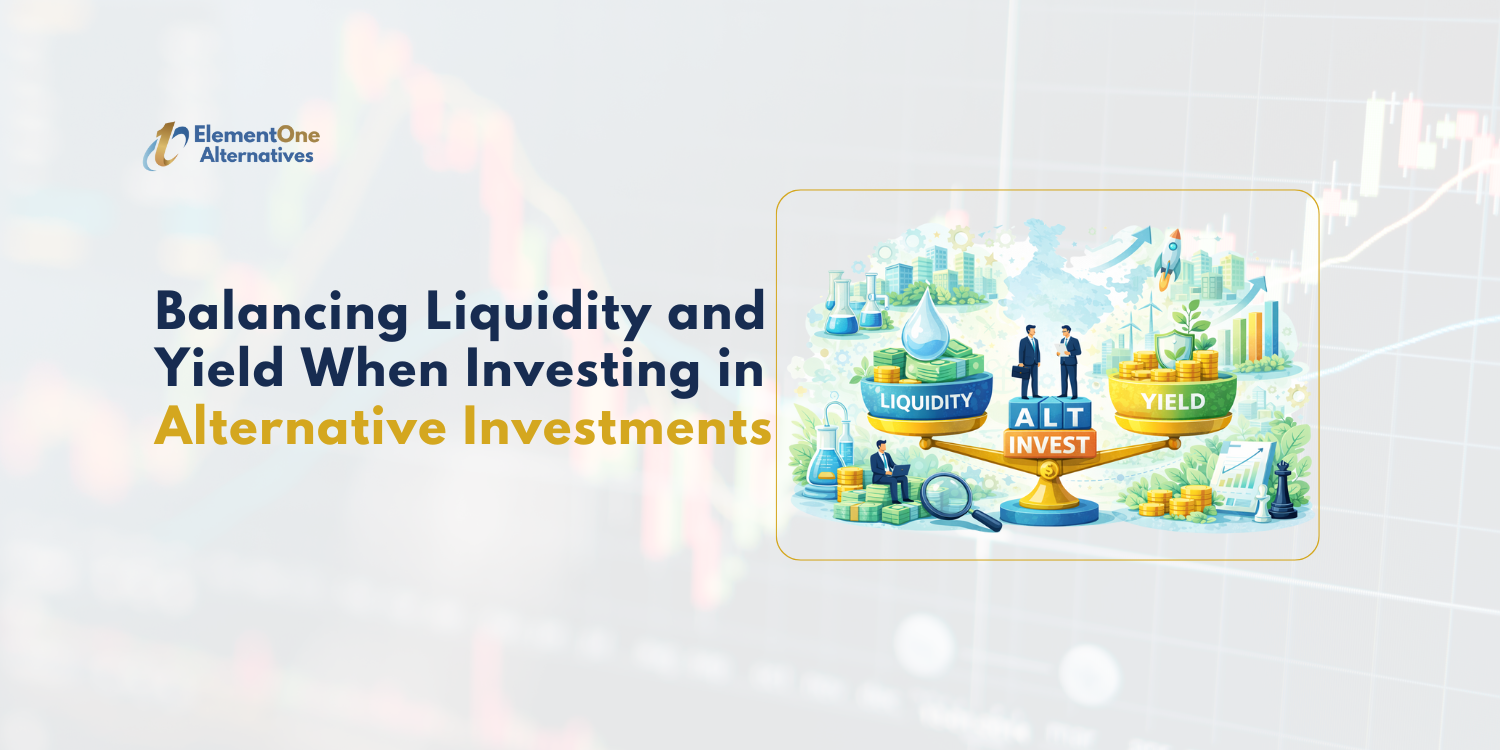
One of the most common challenges investors face today is balancing liquidity with return potential. Traditional assets often force a trade-off—high liquidity with lower yields or higher yields with increased volatility. In this context, alternative investments have emerged as a powerful solution, offering differentiated return drivers while requiring thoughtful liquidity planning.
Understanding how to balance liquidity and yield is critical to successfully integrating alternatives into a diversified portfolio.
Why Liquidity Matters in Portfolio Construction
Liquidity represents the ability to access capital when needed. For investors, especially HNIs and family offices, liquidity is essential for:
-
Meeting near-term cash requirements
-
Managing unforeseen expenses
-
Rebalancing portfolios during market volatility
While liquidity is important, maintaining excessive liquidity can dilute long-term returns. This is where alternative investments require careful consideration.
The Yield Advantage of Alternative Investments
Alternative investments are often designed to generate higher risk-adjusted returns compared to traditional assets. This is because they:
-
Access private markets unavailable through public instruments
-
Use structured and customised investment strategies
-
Rely on contractual cash flows rather than market pricing
Higher yield is a key reason investors allocate to alternative investments, particularly in an environment of compressed returns from traditional fixed income.
The Liquidity Trade-Off in Alternatives
Unlike listed equities or bonds, many alternative investments are less liquid. Capital is typically committed for longer durations, and exits may depend on cash flows or asset realisation.
This illiquidity is not inherently negative. In fact, it often enables:
-
Better structuring and downside protection
-
Reduced sensitivity to short-term market noise
-
Enhanced return potential through an illiquidity premium
The key lies in aligning liquidity constraints with investment objectives.
Designing a Balanced Allocation
Balancing liquidity and yield within alternative investments starts with defining the role alternatives play in the portfolio.
A practical framework includes:
-
Liquid assets: Cash, short-term debt, and listed instruments
-
Semi-liquid alternatives: Income-oriented strategies with periodic distributions
-
Illiquid alternatives: Long-term growth or structured strategies
This layered approach ensures access to capital without sacrificing yield.
Role of Income-Oriented Alternatives
Income-focused alternative investments play a crucial role in balancing liquidity and yield. These strategies often generate regular cash flows, which can partially offset illiquidity.
Benefits include:
-
Predictable income streams
-
Reduced reliance on asset exits
-
Improved portfolio cash-flow planning
Such strategies are especially relevant for investors seeking yield without full illiquidity exposure.
Diversification Across Alternative Strategies
Not all alternative investments carry the same liquidity profile. Diversifying across multiple strategies helps manage liquidity risk.
Investors may combine:
-
Income-oriented alternatives for stability
-
Growth-oriented alternatives for long-term appreciation
-
Fund-of-funds for staggered liquidity
This diversification smoothens cash flows and reduces concentration risk.
Importance of Liquidity Planning
Effective liquidity management requires forward planning. Investors should:
-
Align investment horizon with liquidity needs
-
Avoid over-allocation to illiquid strategies
-
Maintain adequate liquid reserves
A disciplined approach ensures that alternative investments enhance, rather than constrain, portfolio flexibility.
Risk Management and Transparency
Liquidity considerations must be supported by strong governance and transparency. Investors should evaluate:
-
Fund structure and redemption terms
-
Cash-flow visibility
-
Reporting frequency and clarity
Clear communication from fund managers improves confidence in balancing liquidity and yield.
Regulatory Comfort and Market Maturity
Regulatory evolution has strengthened the alternative investments ecosystem, improving transparency and investor protection. This has made it easier for investors to assess liquidity risks and plan allocations more effectively.
As markets mature, alternative investments are becoming more structured and predictable in terms of cash-flow management.
Conclusion
Balancing liquidity and yield is one of the most important considerations when investing in alternative investments. While alternatives often involve longer investment horizons, they offer enhanced yield potential, diversification, and portfolio stability.
By adopting a structured allocation framework, diversifying across strategies, and planning liquidity carefully, investors can harness the benefits of alternative investments without compromising financial flexibility.
Keep reading and supporting ElementOne Alternatives!
Disclaimer: This information is provided solely for informational purposes and has been gathered from various online sources. ElementOne does not endorse or recommend any products or services. Please verify all details before making any decisions.